
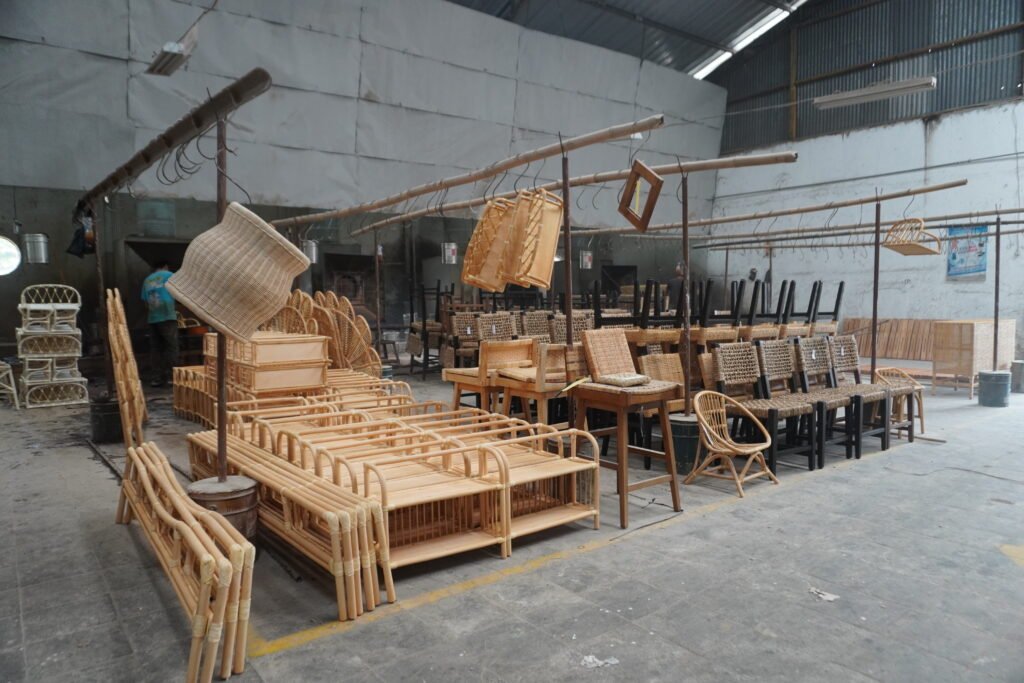
Rattan is a remarkable natural resource from the tropical jungles of Asia and Africa. Specifically, it belongs to the Calameae palm family. Unlike rigid trees, rattan grows as long, flexible vines that climb through the forest canopy. For instance, these vines can reach lengths of over 100 meters. Consequently, indigenous communities have harvested these sturdy plants for centuries. They value the material for its incredible strength; moreover, it is surprisingly light. Today, rattan has evolved into a major global commodity used for high-end furniture.
In terms of geography, Southeast Asia is the heart of global rattan production. Currently, this region provides the vast majority of the world’s total supply. In particular, Indonesia is the undisputed leader in this industry. It produces roughly 70% to 80% of all raw rattan globally. This is because the nation’s vast rainforests offer perfect growing conditions. In addition, countries like Vietnam, Malaysia, and the Philippines play key roles. These nations often focus on specialized processing or unique furniture designs.
Meanwhile, the journey from the forest to your home is a labor-intensive process. First, harvesters must carefully pull the thorny vines down from high trees. After that, workers strip the outer skin and treat the core to prevent rot. Furthermore, rattan’s greatest asset is its incredible versatility. For example, it can be stained, painted, or kept in its natural state. Because it bends into complex curves, it is a favorite for modern designers. As a result, this trade creates a vital link between rural villages and international markets.
In addition to its utility, rattan is a champion of environmental sustainability. Since it is a non-timber forest product, it needs existing trees to grow. Therefore, it gives local communities a reason to protect forests instead of clearing them. Furthermore, when harvested correctly, rattan is a rapidly renewable resource. In fact, some species grow much faster than traditional hardwood trees. Because of this “green” profile, it appeals to eco-conscious shoppers. Ultimately, choosing rattan helps reduce the carbon footprint.
In conclusion, the future of rattan depends on balancing high demand with careful preservation. For this reason, many countries now restrict raw exports to protect local supplies. Nevertheless, challenges like habitat loss and over-harvesting still exist. By mapping these producers, however, we can better value the material’s origin. We clearly see the link between tropical biodiversity and our home decor. Thus, rattan remains a beautiful bridge between the wild forest and our modern living spaces.