
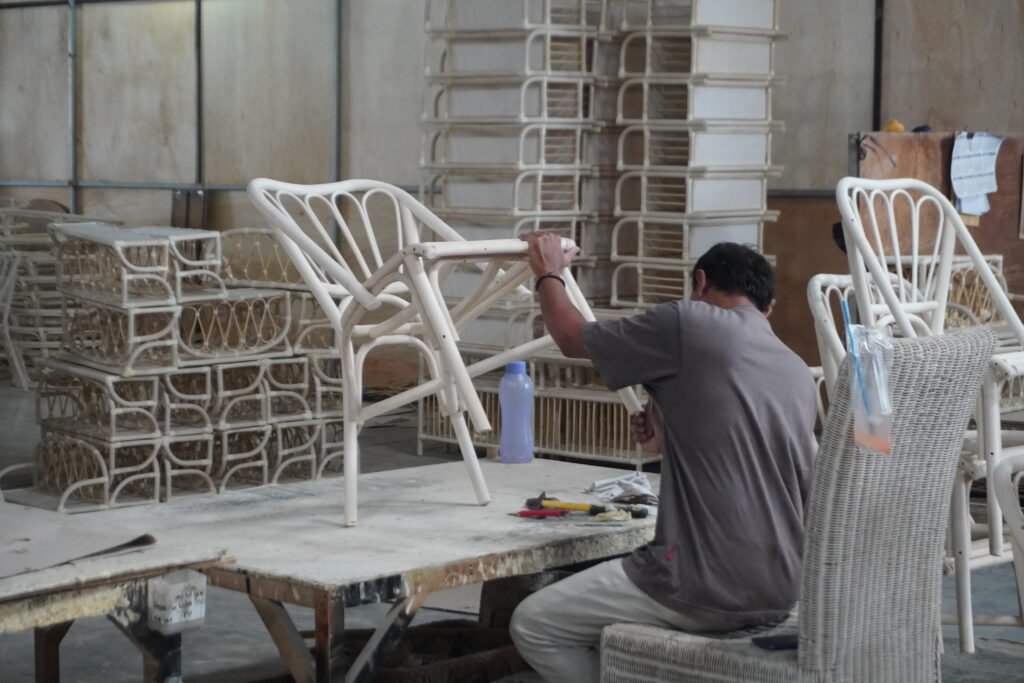
Indonesia is home to more than 80% of the world’s natural rattan resources, making it the global heart of rattan furniture production. Beyond numbers, each rattan product made in Indonesia carries a story — of skilled hands, sustainable forests, and a cultural tradition that blends art with functionality.
This article takes you inside the production process of Indonesian rattan furniture, showing how nature and craftsmanship come together to create timeless pieces loved worldwide.
1. Sourcing from Sustainable Forests
The journey begins deep in the tropical forests of Kalimantan, Sulawesi, and Sumatra — where rattan vines grow naturally around tall trees.
Harvesting is done carefully by local communities following sustainable forestry standards to prevent deforestation.
After collection, rattan is cleaned, dried, and transported to processing centers — often small family-run workshops that form the backbone of Indonesia’s rattan industry.
2. Processing and Preparation
At the production site, raw rattan undergoes several treatments:
Stripping and washing to remove outer layers.
Boiling to eliminate sap and pests.
Drying in the sun or special ovens for durability.
Coloring and polishing using natural or eco-friendly finishes.
Each step is crucial to ensure the rattan becomes strong, flexible, and ready for crafting. Modern factories often combine traditional methods with technology-based quality control for export standard.
3. Handcrafted by Skilled Artisans
In cities like Cirebon, Jepara, and Surabaya, thousands of skilled artisans weave rattan into chairs, tables, and lamps.
This is where artistry meets engineering — every curve, knot, and weave pattern is made by hand.
The process can take several days or even weeks depending on design complexity, making each product unique and full of character.
4. Finishing and Export Quality Control
After shaping, furniture is polished, coated, and checked for strength and symmetry.
Export-quality workshops follow international standards such as ISO 9001 and SVLK to ensure durability and safety.
Finally, the products are packed carefully using eco-friendly materials, ready to be shipped to destinations across Europe, America, and Asia.
5. Empowering Communities and Preserving Culture
The rattan industry supports over 700,000 Indonesian workers, many from rural areas.
Beyond economic value, it helps preserve cultural craftsmanship and sustainable forest management.
By choosing Indonesian rattan, global buyers participate in a movement that values people, planet, and tradition.
Rattan furniture production in Indonesia is more than manufacturing — it’s a living tradition that connects nature, craftsmanship, and community.
From sustainable harvesting to meticulous handcrafting, every process reflects Indonesia’s dedication to quality and authenticity.
That’s what makes Indonesian rattan not just furniture — but a global symbol of sustainable artistry.