
Actually, there is a fascinating technical distinction to make: rattan isn’t “carved” like teak or mahogany; instead, it is shaped or bent. While hardwood has a rigid grain that must be chiseled away to create patterns, rattan possesses a unique anatomical structure that allows it to become incredibly elastic without snapping. Here is the scientific secret and the process behind rattan’s flexibility:
Anatomical Structure
Rattan’s vascular structure is very different from a solid hardwood tree. While wood has dense growth rings, a rattan stalk consists of thousands of tiny long channels (vessels). Porous Core, the inner part of the rattan (the pith) is porous and contains lignin and cellulose that are less rigid than standard timber. Fibrous Nature, because it is made of long, parallel fibers, rattan acts more like a bundle of copper wires that can be coiled, rather than a block of ice that would crack under pressure.
The Steaming Process
This is the ultimate key to rattan’s flexibility in the furniture industry. Before being shaped, rattan must undergo steaming. Softening Lignin, lignin is the natural “glue” that holds plant fibers together. When exposed to high-pressure steam, this lignin softens and becomes pliable, almost like heated plastic. Molding, in this hot, damp state, craftsmen can bend even thick rattan poles into iron molds or jigs. Permanent Set, once the rattan cools and dries in that bent position, the lignin hardens again, “locking” the rattan into that specific shape permanently.
Torch Bending
For more detailed curves or small adjustments in traditional workshops, craftsmen often use a direct flame (blowtorch). The heat is directed at a specific point on the stalk while applying steady pressure. It requires immense skill to ensure the outer skin doesn’t char while the internal core becomes hot enough to yield.
Peeling for Intricate Weaving
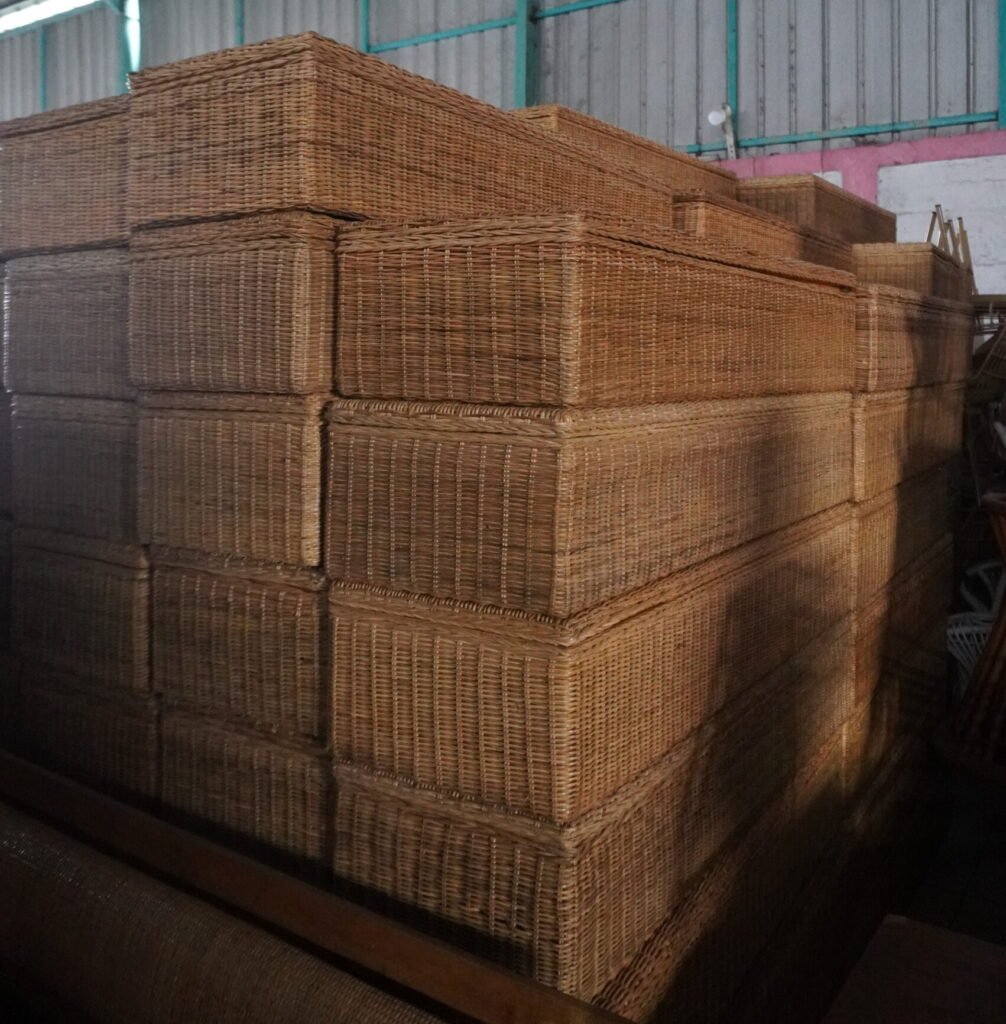
Beyond bending the main poles, the “carved” look of rattan furniture often comes from rattan peel. The outer skin is stripped into thin, ribbon-like strands that are extremely supple. These ribbons are then woven (not carved) into intricate motifs like diamond weaves, fretwork, or honeycomb patterns. This flexibility allows for designs far more complex than what could be achieved by chiseling wood.