
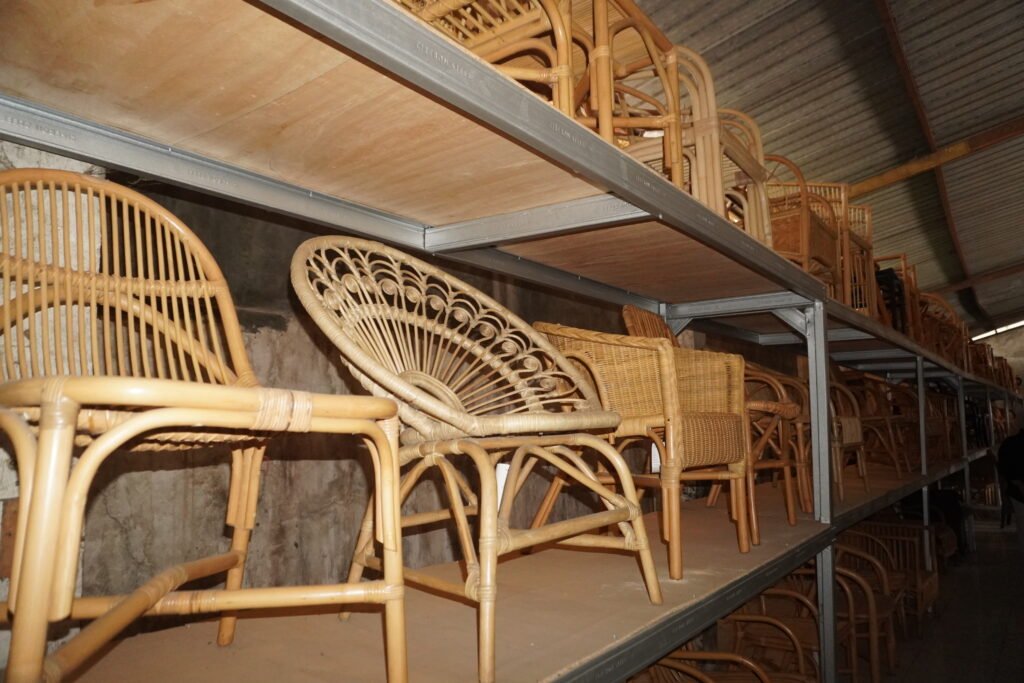
The global furniture market is undergoing a significant shift toward sustainability. At the heart of this movement is a thorny, climbing palm from the tropical rainforests of Southeast Asia: Rattan. For international buyers and entrepreneurs, Indonesia isn’t just a supplier—it is the undisputed titan of the industry.
Why Indonesian Rattan Leads the World
What sets Indonesian rattan apart from varieties found in Africa or South America? It comes down to the unique biodiversity of the Indonesian archipelago. The country produces approximately 80% of the world’s supply, offering a level of quality that is difficult to match elsewhere
A Sustainable Business The “Manau” Factor: Superior Durability
Indonesian species like Calamus manan (Manau rattan) are world-renowned for their exceptional strength-to-weight ratio. These vines are flexible enough to be bent into intricate, ergonomic designs, yet they remain sturdy enough to last for generations without losing their structural integrity
Natural Aesthetics and Aging
Beyond strength, there is the matter of beauty. The natural luster and texture of Indonesian rattan require minimal chemical treatment compared to other fibers. It ages beautifully, developing a rich patina over time—a organic charm that synthetic alternatives simply cannot replicate.
Unmatched Variety from the Archipelago
With over 300 species found across Kalimantan, Sulawesi, and Sumatra, Indonesia offers an incredible range of diameters and textures. This diversity allows the industry to cater to everything from heavy, load-bearing furniture frames to delicate, fine-gauge weaving known as cane.
A Win-Win for the Environment
In an era where “Eco-friendly” is a mandatory label for European and American markets, rattan is a winner. Unlike timber, which can take decades to mature, rattan is a fast-growing vine that can be harvested in just 5 to 7 years, making it a highly renewable resource.
Conservation Through Commerce
Rattan requires healthy forests to grow, as it uses tall trees for support. This creates a powerful economic incentive for local communities to preserve the rainforest rather than clear it for palm oil or mining. Exporting Indonesian rattan is, essentially, exporting a story of environmental conservation.
The Modern Face of Rattan Craftsmanship
The export opportunity is no longer limited to raw materials. Indonesia has seen a surge in high-end manufacturing hubs, particularly in Cirebon and Solo. Today’s products are a far cry from the dated “patio furniture” of the 1970s. Local designers are now blending rattan with steel, leather, and stone to create minimalist, mid-century modern, and bohemian-chic aesthetics. These contemporary styles currently dominate platforms like Pinterest and high-end interior magazines, opening doors for premium export partnerships worldwide.