
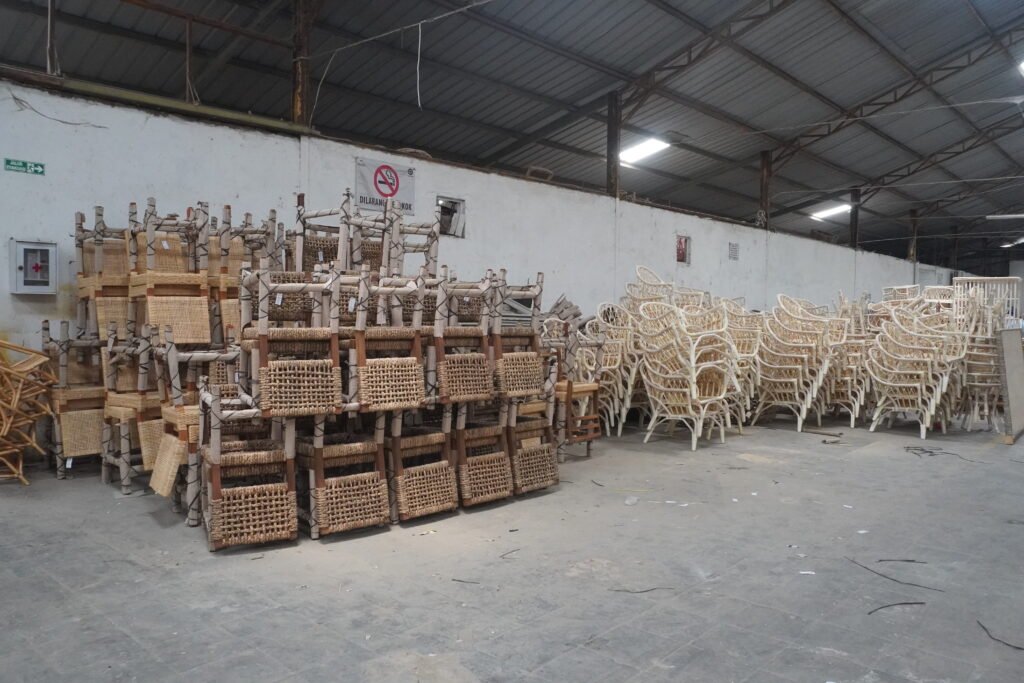
Indonesia is known as the world’s largest producer of natural rattan—supplying more than 80% of the global market.
But what truly sets Indonesian rattan furniture apart is the craftsmanship behind it. Inside a traditional workshop, especially in Cirebon, every piece is shaped by skilled hands using techniques passed down for generations.
This article takes you behind the scenes to see how traditional rattan methods evolve into modern furniture designs that are admired worldwide.
1. Selecting High-Quality Rattan Materials
The process begins long before the shaping and weaving. Rattan poles arrive in bundles and must be carefully selected to ensure consistency and strength.
In the workshop, craftsmen:
- Sort rattan by thickness and flexibility
- Remove the outer skin
- Dry the rattan under sunlight or a controlled heating system
Indonesia has hundreds of rattan species, but the most common for furniture are Manau, Sega, and Tohiti—known for their durability and smooth surface.
Material selection directly influences the strength, durability, and visual quality of the furniture.
2. Heating & Shaping: The Craft Behind the Curves
Before rattan can be shaped, it must be heated. This step is essential for creating the signature curves seen in modern and classic furniture designs.
Common shaping steps include:
- Heating rattan poles using steam or an open flame
- Bending them around wooden molds
- Securing the shape until the material cools and hardens
This combination of heat and manual pressure allows Indonesian craftsmen to create forms that look simple but require remarkable precision.
3. Hand-Weaving: The Heart of Traditional Craftsmanship
Weaving is where technique, creativity, and skill truly shine. Each pattern is woven manually, strand by strand, requiring patience and years of experience.
Common weaving styles include:
- Open Weave – airy, modern, and lightweight
- Closed Weave – dense and traditional
- Diamond Weave – decorative and high-value
- Custom motifs depending on design trends
Because weaving is done by hand, no two pieces are ever identical—giving Indonesian rattan its authentic, handcrafted character.
4. Blending Tradition With Modern Designs
Today’s global market demands designs that fit modern homes, cafés, hotels, and resorts.
While techniques remain traditional, the designs have evolved dramatically.
Modern workshops now incorporate:
- Scandinavian-inspired shapes
- Boho, coastal, and Japandi style
- Thinner silhouettes and minimalist forms
- Mixed materials (rattan + metal / rattan + teak wood)
- Eco-friendly finishing products
This blend of old and new creates furniture that feels timeless yet contemporary—making Indonesian rattan highly competitive worldwide.
5. Export-Quality Finishing and Quality Control
The final stage is what transforms a handmade piece into export-quality furniture.
Craftsmen perform:
- Careful sanding for a smooth surface
- Application of natural, white-wash, walnut, or matte black finishing
- Structural testing for durability
- Inspection of weaving symmetry
- Secure packaging for international shipping
This ensures each product meets global standards and arrives safely at its destination.
Traditional rattan workshops in Indonesia are more than production spaces—they are cultural heritage centers where generational skills meet modern design demands. From raw material selection to hand-weaving and finishing, every step reflects a deep connection between nature, culture, and craftsmanship.
This is why Indonesian rattan furniture continues to be trusted by international buyers looking for authenticity, quality, and unique design.
Looking for a reliable Indonesian rattan furniture exporter?
We work with skilled artisans in Cirebon to produce handcrafted, export-quality rattan furniture for global markets.👉 Contact us for catalog, product customization, and pricing.