
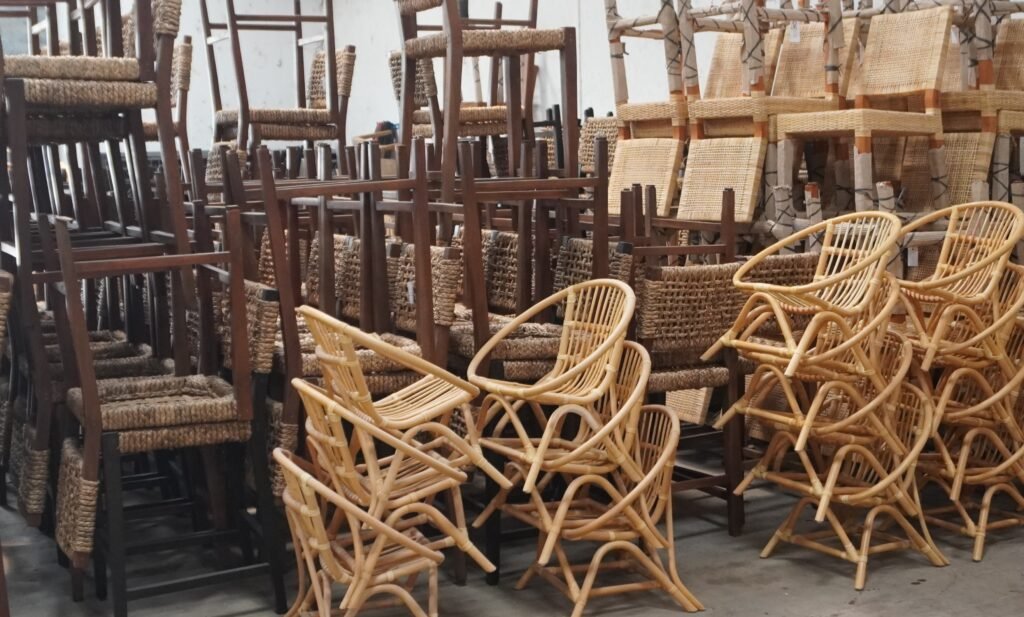
Rattan furniture is more than just seating; it is a timeless texture, a design element that effortlessly bridges classic elegance and tropical chic. It carries the whisper of the rainforest and the warmth of a skilled artisan’s hand.
While the world may currently celebrate rattan as a modern trend—perfect for achieving the Scandinavian, Boho, or Japandi aesthetic—its history in Indonesia is far more profound. As the undisputed global leader in raw rattan supply, Indonesia holds a woven legacy spanning centuries, connecting its lush tropical forests to some of the world’s most stylish living spaces. This article explores the rich history of rattan furniture.
The use of rattan (rotan) in the Indonesian archipelago is not a new export trend; it is a deep-rooted cultural tradition. Long before rattan furniture adorned European sunrooms, the strong, flexible vines were used by local communities for essential items, ranging from robust baskets and tools to simple, durable household furnishings. This demonstrates the profound woven furniture heritage of the archipelago.
The material’s first true international exposure came during the Dutch colonial era. Dutch administrators and traders, recognizing the superior resilience and lightweight elegance of the material, commissioned local artisans to craft European-style cane furniture. This period marked a pivotal shift: rattan transcended its status as a simple utility material and began its evolution into a high-demand luxury product.
While the raw rattan vines are harvested from the dense jungles of Kalimantan (Borneo) and Sulawesi, the mastery that transforms this rough material into polished furniture primarily resides in Cirebon, West Java.
Cirebon is recognized worldwide as the epicenter of Indonesian rattan craftsmanship and Cirebon rattan manufacturing. This region acts as the crucial meeting point where the harvested material arrives for sorting, treating, and most importantly, weaving. Generations of artisans here have perfected techniques for steaming, bending, and weaving the cane…
The label “Made in Cirebon” or “Made in Indonesia” on a high-quality rattan piece is, therefore, a stamp of approval—a nod to a heritage of handmade rattan that continues to shape global design.
For decades following the colonial period, rattan was perhaps unfairly typecast. However, in the 21st century, rattan has experienced a massive global design renaissance, redefining its place in contemporary interiors.
This resurgence is driven by key global trends: Bohemian (Boho), Japandi, and the overall push toward natural materials. Its organic, imperfect look provides a soft contrast to clean, modern lines. Today, Indonesian artisans are weaving rattan not just into classic chairs, but into architectural elements like room dividers, intricate lighting fixtures, headboards, and accent cabinets. In a market saturated with uniform, machine-made goods, the subtle variations and unique feel of handwoven Indonesian rattan provide a coveted stamp of authenticity—a quiet luxury that appeals directly to discerning international consumers.
Beyond its aesthetics and heritage, the most compelling reason for Indonesian rattan’s enduring appeal lies in its outstanding sustainability credentials and inherent durability.
Unlike slow-growing hardwoods, rattan is a vine that regenerates rapidly, making it one of the world’s most renewable natural resources. It is often harvested with minimal impact on the surrounding forest ecosystem. Furthermore, authentic natural rattan is 100% biodegradable. Choosing it is a vote for sustainability, supporting both the environment and the local communities that practice sustainable harvesting and provide eco-friendly rattan furniture.
When properly treated and maintained—especially when placed in its ideal indoor or fully covered outdoor setting—rattan furniture is incredibly robust. Its natural flexibility allows it to withstand significant use without cracking or becoming brittle. It represents a long-term investment, capable of lasting for generations.
Indonesia’s woven legacy is more than just a history lesson; it is a promise of quality. When you choose a piece of rattan furniture crafted by Indonesian hands, you are not merely purchasing an object. You are investing in centuries of skill, supporting a rich cultural tradition, and bringing an element of timeless, tropical elegance into your home.
It is an art form that has traveled from the heart of the rainforest, through history, to claim its place as a modern, sustainable icon of global design.